Getting a new puppy is super exciting. It’s also a great chance to start training them early. As a first-time puppy owner, training might seem scary. But, with the right steps, you can make your puppy well-behaved and confident.
In this guide, we’ll cover the key steps to start your puppy’s training. We’ll talk about obedience, socialization, and how to be a great companion for life.
Key Takeaways
- Start puppy training as early as 8 weeks old for the best results
- Use positive reinforcement techniques like treats and praise to encourage good behavior
- Establish a consistent daily routine for feeding, potty breaks, playtime, and training sessions
- Prioritize socialization to help your puppy feel confident in new environments and around people and animals
- Seek professional help from puppy training classes or a certified dog trainer if needed
The Importance of Puppy Training
Puppy training is key to raising a well-behaved dog. It helps develop obedience and positive behaviors. Early training lays the groundwork for a lifelong bond with your pet.
Why Train Your Puppy?
Training your puppy is more than just teaching commands. It’s about teaching good habits and social skills. Starting early helps your pup learn important behaviors for life.
Benefits of Early Training
- Improved obedience and responsiveness to commands
- Enhanced socialization and confidence around people and other animals
- Reduced risk of behavioral issues like excessive barking, jumping, or chewing
- Stronger bond and communication with your pup through positive reinforcement
Start puppy training early, around 8-12 weeks. This is when your pup is most curious and eager to learn. It sets the stage for a well-behaved, confident dog.
Whether you go for a formal training program or DIY at home, early puppy training is a game-changer. With time and patience, you’ll have a loyal, well-adjusted dog for years.
Preparing for Puppy Training
Before starting your puppy’s training, it’s key to prepare well. Choosing the right training method and getting the right supplies is crucial. This will make your training journey with your puppy positive and rewarding.
Choosing the Right Puppy Training Method
Positive reinforcement is the best way to train puppies. It rewards good behavior with treats or praise. Clicker training is also great for quick learning.
Essential Training Supplies
- A sturdy crate for housetraining and a safe, comfy spot for your puppy
- A collar and leash for teaching basic commands and leash manners
- High-quality puppy food and water bowls for nourishment during training
- A variety of chew toys and interactive toys to keep your puppy engaged and prevent boredom
Getting these training supplies will help create a structured, enriched environment. This is where your puppy can thrive during training.
Basic Commands and Techniques
Teaching your puppy the basics is the first step in their training. Commands like sit, stay, and come are essential. Experts say puppies should start learning these commands right away.
Teaching Sit, Stay, and Come
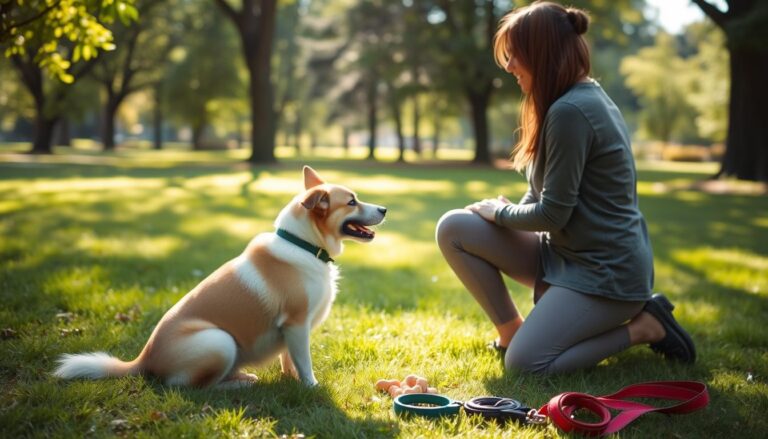
Positive reinforcement is key when teaching these commands. Get down to your puppy’s level and use treats and praise as rewards. Be patient and consistent. Clicker training can also help, as it clearly signals when your puppy does something right.
Remember, the three D’s of dog training are important. These are duration, distance, and distractions. Start with simple tasks and gradually make them harder as your puppy gets better.
Positive Reinforcement Methods
- Use high-value treats, such as small pieces of cooked chicken or cheese, to reward your puppy for good behavior.
- Incorporate play and praise as positive reinforcement, offering enthusiastic encouragement when your puppy performs the commands correctly.
- Keep training sessions short, lasting only five to 10 minutes, to maintain your puppy’s interest and prevent boredom or frustration.
Consistency is crucial in positive reinforcement training. Reward-based training is the most effective way to teach basic commands. It strengthens the bond between you and your puppy.
Housebreaking and Potty Training
Housebreaking and potty training are key parts of puppy care. It’s important to have a routine for taking your puppy out at set times. This includes after meals, naps, and play. Always praise and reward your puppy when they go outside.
Clean up any accidents inside well to avoid your puppy going there again. Patience and consistency are vital for housebreaking.
Watching your puppy for signs they need to go is a good way to potty train. Look for circling, sniffing, or squatting. When you see these signs, take your puppy to their potty area right away.
Give treats and praise when they go in the right spot. This helps them learn good habits.
- Establish a consistent routine for taking your puppy out to potty
- Reward and praise your puppy when they eliminate outside
- Clean up indoor accidents thoroughly to remove any lingering odors
- Be patient and consistent throughout the housebreaking process
- Watch for and respond to your puppy’s potty signals to reinforce the correct behavior
Getting your puppy to be house-trained takes time and effort. But the joy of having a well-trained dog is worth it. By sticking to a routine and following these tips, you can teach your puppy good habits for life.
Puppy Training
Creating a puppy training routine is key for your puppy’s growth. It helps them learn good habits and feel safe. Start by making a training schedule for feeding, potty breaks, training, and play.
Establishing a Training Routine
Keep training sessions short and fun. Aim for 10-15 minutes, several times a day. Use lots of praise and rewards to keep your puppy excited to learn.
Make sure training is enjoyable for your puppy. This is the secret to their success.
Incorporating Playtime and Exercise
Play and exercise are vital for your puppy’s health. Play games like fetch or tug-of-war. Also, take them on walks to explore new places.
Active play helps your puppy burn energy and bond with you. It also improves their socialization skills.
A happy, active puppy is easier to train. With a routine and playtime, your puppy will thrive in training.
Socialization and Exposure
Puppy socialization is key to training your furry friend. Between 4-12 weeks, introduce your puppy to new places, people, and animals. This helps avoid future behavior problems and makes your puppy confident and well-adjusted.
Introducing New Environments
Take your puppy to different places like busy streets and parks. This helps them get used to the world and prevents fears. Always keep them on a leash and reward them with treats or praise when they’re brave.
Socializing with People and Animals
It’s also vital to socialize your puppy with people and other dogs. Puppy socialization classes are great for this. They let your puppy meet others under a trainer’s watchful eye.
Start new experiences slowly and positively. With patience and consistency, your puppy will grow into a confident friend.
Focus on socialization and exposure during your puppy’s critical period. This sets the stage for a lifelong bond and a well-behaved dog.
Dealing with Common Puppy Behaviors
Raising a puppy is a joyful journey, but it comes with challenges. Two big ones are puppy chewing and puppy biting. Puppies explore by mouth, which can lead to chewing on things they shouldn’t. Give them chew toys and redirect their attention when they chew on something they shouldn’t.
Managing Separation Anxiety
Separation anxiety is a common issue for puppy owners. Puppies may bark, whine, or get destructive when left alone. They struggle with being away from their humans. Start by leaving them alone for short times and give them toys or puzzle feeders to keep them calm.
Remember, positive reinforcement and behavior modification are crucial. Reward your puppy for good behavior and be patient. If problems persist, get help from a professional dog trainer or animal behaviorist.
Advanced Training Techniques
Once your puppy knows the basics, it’s time for more advanced training. Teaching tricks and commands can impress friends and boost your puppy’s skills. Agility training is also great for mental and physical challenges, strengthening your bond.
Teaching Tricks and Commands
Teaching tricks like “spin,” “bow,” and “weave” is fun and helps your puppy’s body awareness. These commands build confidence. Use treats and praise to teach these puppy tricks and puppy commands effectively.
Introducing Agility Training
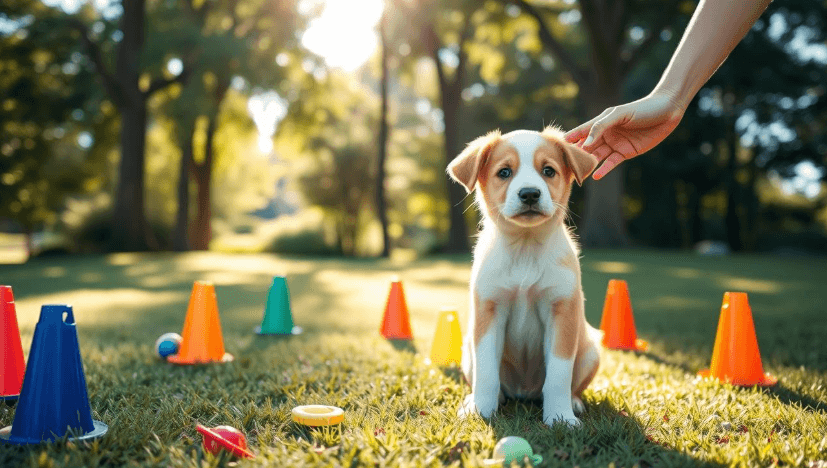
Agility training is excellent for your puppy’s agility training and confidence building. Start with simple obstacles and add more complex ones later. Keep training positive and fun, rewarding your puppy for their efforts. Agility training keeps your puppy physically and mentally active.
For advanced training to succeed, stay positive, patient, and consistent. With time and effort, your puppy will grow more confident and skilled, ready for new challenges and to impress you.
Seeking Professional Help
Training your puppy at home is great, but professional help can be a big plus. It’s especially useful if you face behavioral issues or want to improve your puppy’s training. A training class offers expert advice, socialization, and a structured learning space.
When picking a puppy training class, look for positive reinforcement and experienced instructors. In Control Dog Training in New Orleans has over 40 years of experience. They offer puppy, obedience, and service dog training.
- Dog obedience classes included in most packages
- Only 15 minutes of follow-up practice per day required
- High client satisfaction ratings
- Lifetime investment in the owner’s success
Their training uses Classical Conditioning for success. They tackle issues like aggression, anxiety, and destructive chewing. No matter your puppy’s breed or background, In Control Dog Training has personalized solutions.
Professional puppy training classes can change your life. They help you bond with your puppy and teach them important skills. This way, your puppy will be happy and well-adjusted.
Puppy Training Tips and Tricks
Effective puppy training is more than just basic techniques. Adding a few extra strategies can help your puppy succeed long-term. Focus on positive reinforcement, consistent routines, and boosting your puppy’s confidence.
Positive reinforcement is key in training. Use treats and praise to keep your puppy interested and eager to learn. Punishment can harm your puppy’s trust and confidence.
- Use high-value treats like cooked chicken or cheese to reward your puppy.
- Give lots of praise and affection when your puppy does well.
- Stop using treats as rewards when your puppy gets better, use praise and play instead.
Having a daily routine for training, exercise, and play is very helpful. It makes your puppy feel secure and builds trust and confidence.
- Choose specific times each day for training, keeping it short and fun.
- Make sure to include regular exercise and play to keep your puppy’s mind and body active.
- Keep a regular sleep schedule, including naps, for your puppy’s health.
Helping your puppy feel confident by introducing them to new things is important. Slowly expose them to different sights, sounds, and people. This helps them adjust well to new situations.
Every puppy is different, so what works for one might not work for another. Be flexible, listen to your puppy, and adjust your training as needed. With the right approach and dedication, your puppy can become a well-trained and confident friend.
Conclusion
Puppy training is key to raising a well-behaved and confident dog. Starting early and using positive reinforcement helps a lot. It also includes socialization and exercise.
While it can be tough, being patient and consistent is important. It helps build a strong bond with your puppy. This bond leads to a lifelong friendship.
The right training approach sets your puppy up for success. It prevents bad behaviors and makes them confident. Puppy preschool classes improve their social skills and interactions with other pets.
Every puppy is different, so training needs to be tailored. Stay patient and consistent to help your puppy thrive. With the right tools and approach, your puppy will grow into a well-adjusted and obedient friend.
FAQ
When is the best time to start puppy training?
Start puppy training at eight weeks old. Puppies learn best between eight and twelve weeks. This is a great time to teach them important commands and social skills.
What are the benefits of early puppy training?
Early training improves obedience and confidence. It also reduces behavioral issues and strengthens the bond with the owner. Puppies learn quickly and develop good habits early on.
What are the essential supplies needed for puppy training?
You’ll need a crate, collar and leash, food and water bowls, and high-quality puppy food. Also, get chew toys and interactive toys to keep your puppy engaged.
How do I teach my puppy basic commands?
Teach sit, stay, and come by getting down to your puppy’s level. Use treats and praise for correct behavior. Clicker training is also effective for basic commands.
How do I potty train my puppy?
Create a routine for taking your puppy outside after meals, naps, and play. Praise and reward them when they go outside. Clean up any accidents to remove odors.
How important is socialization for my puppy?
Socialization is key for your puppy’s adjustment and confidence. Introduce them to new people, animals, and places in a positive way. Do this during the first 12 weeks of age.
How do I address common puppy behaviors like chewing and separation anxiety?
Puppies chew and bite as they explore and relieve teething pain. Give them chew toys and redirect unwanted chewing. Use positive reinforcement for good behavior. For separation anxiety, start with short periods alone and use enrichment toys.
What are some advanced training techniques I can try with my puppy?
Teach tricks and commands after mastering basic ones. Tricks like “spin” and “weave” improve flexibility and confidence. Agility training challenges your puppy mentally and physically.
When should I consider seeking professional help for my puppy’s training?
Professional help is useful for behavioral challenges or advanced training. Training classes offer expert guidance, socialization, and a structured environment.