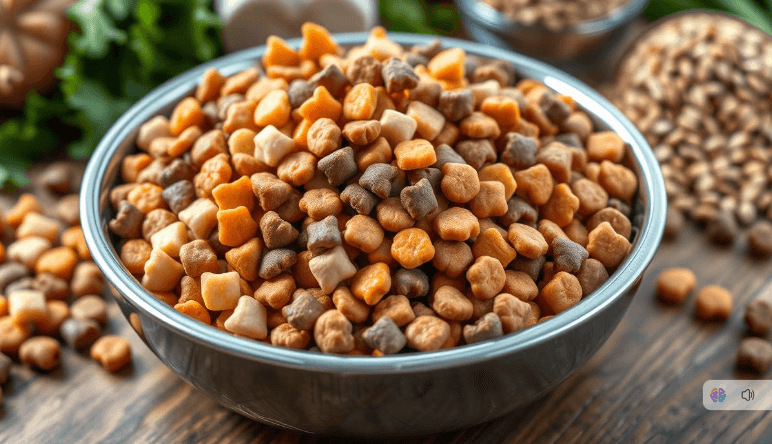
As a lifelong dog owner, I’ve seen the joy and companionship our furry friends bring. Finding the right dog food is key to their health and happiness. With so many options, it can be hard to choose. But with your vet’s help and this guide, you can find the perfect food for your dog.
Key Takeaways
- Proper nutrition is essential for maintaining your dog’s health and well-being.
- Consulting your veterinarian is the best way to determine your dog’s specific dietary needs.
- This guide will provide you with the essential information to choose the best dog food for your furry friend.
- Factors to consider include protein sources, fat content, carbohydrates, and specialized dietary requirements.
- Navigating the vast array of dog food options can be daunting, but this guide will help you make an informed decision.
Understanding Dog Nutrition Basics
Proper dog nutrition is key for your dog’s health and happiness. It’s about giving them the right mix of protein, fat, and nutrients. This supports their active life and growth.
Protein: Building Blocks for Muscle
Protein is vital for a dog’s muscles and repair. The best dog food has at least 18% protein for adult dogs. Sources like chicken, beef, lamb, and fish help with muscle growth and health.
Fats: Energy and Support for Coat and Joints
Fats give dogs lots of energy, more than protein or carbs. Dry dog food should have less than 20% fat. Healthy fats like fish oil, flaxseed oil, and chicken fat also keep their coat and joints healthy.
Dogs also need essential nutrients like vitamins, minerals, and carbs. Whole grains, veggies, and fruits give these nutrients and energy.
Knowing about dog nutrition helps pet owners choose the best food. They can pick commercial food or make a homemade diet that fits their dog’s needs.
Decoding Dog Food Labels
Feeding your dog right means knowing how to read dog food labels. These labels are full of important info to help you choose the best food for your pet. Let’s explore the key parts of dog food labels and how to understand them.
Understanding Ingredient Lists
The ingredient list on dog food labels is key to knowing the food’s quality. Ingredients are listed by weight, so the first ones are the main ingredients. Look for proteins like chicken, beef, or lamb at the top. Avoid foods with fillers like corn, wheat, and soy, as they don’t offer much nutrition.
Also, check for the AAFCO (Association of American Feed Control Officials) statement. This shows the food meets the standards for a complete and balanced diet for dogs. It’s a sign of a good dog food.
The Guaranteed Analysis section shows the minimum or maximum amounts of nutrients like protein, fat, and fiber. This helps you see if the food meets your dog’s nutritional needs.
Finally, look at the Feeding Guidelines to find out how much food your dog needs. This helps keep your dog at a healthy weight and prevents eating too much or too little.
By understanding dog food labels, you can make better choices for your dog’s health. Always talk to your vet if you have questions about your dog’s diet.
Choosing the Right Type of Dog Food
Feeding your dog has more options than just wet and dry food. Now, you can pick from fresh, dehydrated, and even meal delivery services.
Dry food, or kibble, is easy to store and lasts long. Wet food has more moisture, good for dogs who get dehydrated easily. Fresh food uses whole ingredients and fewer additives, appealing to those who want natural options. Dehydrated food keeps nutrients and is easy to store.
The best food for your dog depends on their needs and health. Always talk to your vet to make sure you’re giving the right food.
When picking dog food, think about these things:
- Your dog’s age, size, and how active they are
- Any health issues or food allergies
- The quality and where the ingredients come from
- The food’s nutritional value, like protein and fat
- Certifications from groups like the Association of American Feed Control Officials (AAFCO)
Understanding the different dog foods and what your pet needs helps you choose the best. This supports your dog’s health and happiness.
Best Dog Food Brands and Recipes
Choosing the best dog food is a big decision for pet owners. Many top brands meet strict standards. They follow the Association of American Feed Control Officials (AAFCO) and the World Small Animal Veterinary Association (WSAVA) guidelines. This ensures their food is safe and nutritious.
Brands like JustFoodForDogs, Nom Nom, The Farmer’s Dog, Wellness, Hill’s Science Diet, and Purina are leaders in the market. They offer a wide range of recipes. These recipes meet different dietary needs and preferences, from grain-inclusive to grain-free.
JustFoodForDogs offers plans from $40 to $500 a month. Each box costs between $1.50 to $17.50, depending on the dog’s breed. Nom Nom meals cost about $40 a week for medium dogs and $65 for large dogs. Ollie meals range from $15 to $69 a week, tailored to each dog’s size and needs.
There are also more affordable options. Wellness Simple focuses on limited-ingredient formulas for dogs with allergies. Tender & True offers high-quality food at a budget-friendly price.
Whether you’re searching for the best dog food recipes or top brands, there’s a wide range of choices. These options cater to your dog’s unique needs and preferences.
“Providing your dog with high-quality, nutritious food is one of the most important aspects of responsible pet ownership.”
Tailoring Dog Food for Life Stages
Dogs need different foods at different times in their lives. The right food is key for your pet’s health. The American Association of Feed Control Officials (AAFCO) helps by labeling dog food for each life stage.
Puppy Nutrition
Puppies, pregnant dogs, and nursing mothers need more calories and nutrients. These foods support their growth and help with milk production. Foods for these stages say they are for growth, gestation/lactation, or “all life stages.”
Adult dogs get food labeled “for maintenance.” This is because they don’t need as much as puppies do.
Brands like Purina Pro Plan Puppy Formula and Hill’s Science Diet Puppy are great for puppies. They have the right mix of dog food for puppies to help them grow. These foods are rich in protein, fat, and vitamins and minerals.
When your puppy grows up, switch them to adult dog food. This food keeps them healthy and at a good weight as adults.
Addressing Special Dietary Needs
Dogs with sensitive stomachs, allergies, or health issues can greatly benefit from special dog food. These “veterinary diets” or “prescription diets” are made to handle specific health problems. Your vet can help pick the best food for your dog’s needs.
There are also dog foods made for special diets. These include formulas with fewer ingredients, no grains, low fat, or more fiber. Studies show that overweight dogs face more health risks like diabetes and heart disease.
Brands like Farima, Pedigree, Drools, and Royal Canin have dry foods for weight control. Wet foods from Nutro and Purina Pro Plan are lower in fat and higher in fiber. Sometimes, vets suggest prescription diets for weight management.
For dogs with sensitive stomachs, Instinct Original Grain-Free Recipe with Real Rabbit is a good choice. It uses rabbit as the main protein and avoids common allergens like corn, wheat, and soy.
It’s crucial to work with your vet to find the right diet for your dog. This ensures they get the nutrients they need for health and happiness.
Best Dog Food for Specific Breeds
Choosing the right dog food is not a one-size-fits-all situation. Some brands offer special formulas for specific breeds. These formulas help address health issues related to a dog’s size.
Large-breed puppy foods help control growth and prevent joint problems. Adult large-breed foods support joint health. Small-breed foods have smaller kibble and more calories for fast metabolisms.
Not every dog needs breed-specific food. It’s best to talk to your vet. They can suggest the right dog food for small breeds, dog food for large breeds, or breed-specific dog food for your dog.
Only a few fresh pet food companies meet WSAVA guidelines. JustFoodForDogs and Nom Nom are among them. They offer easy-to-feed, science-backed recipes for pet owners.
Deciding on breed-specific dog food should involve your vet. They can guide you based on your dog’s age, size, and health. This ensures your dog gets the best nutrition for their needs.
Conclusion
Choosing the right dog food can be tough, but it’s crucial for your dog’s health and happiness. Learning about dog nutrition and reading labels helps. You can find a diet that fits your dog’s needs.
The Farmer’s Dog offers a 50% discount and free shipping. Open Farm Dog Food has a 20% discount with code PETKEEN20. Blue Buffalo Divine Delights Variety Pack comes with 12 cans. The Honest Kitchen Dehydrated Whole Grain Chicken is available in six sizes.
Blue Buffalo Life Protection Formula supports puppy growth. Nom Nom Freshly Made Dog Food has a high protein-to-fat ratio and low carbs.
Always talk to your vet for advice on the best dog food for your pet. Making a smart choice based on your dog’s nutrition needs ensures they live a long, happy life. The goal is to find a balance between quality, cost, and your dog’s health and preferences.
FAQ
What are the essential nutrients dogs need in their diet?
Dogs need a balanced diet for health. This includes protein, fat, carbs, vitamins, and minerals. Protein helps build muscles. Fat gives energy and supports the brain, skin, and coat.
Carbs add calories without extra fat or protein, giving lasting energy. Vitamins and minerals are key for body functions.
What makes a dog food label “high-quality”?
A high-quality dog food has an AAFCO label. This shows it meets canine nutrition standards. Also, look for meat-based items as the first ingredients.
What are the different types of dog food available?
There are wet and dry dog foods. Now, there’s also fresh and dehydrated options. You can choose one or mix them. Always check with your vet to ensure your dog’s needs are met.
What are some of the best dog food brands?
Top brands include JustFoodForDogs, Nom Nom, and The Farmer’s Dog. Wellness, Hill’s Science Diet, and Purina are also great. They offer many recipes for different needs and life stages.
How do I choose the right dog food for my pet’s life stage?
AAFCO labels dog food by life stage. Puppies and pregnant dogs need more calories. Foods for growth or gestation/lactation are labeled as such.
Adult dogs need “maintenance” foods. Senior dogs need special care, so your vet can help choose the right food.
What are “veterinary diets” or “prescription diets”?
These diets are for dogs with health issues. They’re made to manage conditions like kidney disease. Your vet can suggest the best diet for your dog’s needs.
Do breed-specific dog foods make a difference?
Breed-specific foods can be helpful. For example, they can control growth in large breeds. But, not all dogs need them. Your vet can advise if they’re right for your dog.