The bond between a dog and their human is special. It grows through play and achievements. As a dog lover, I’ve found dog agility to be rewarding.
It’s great for deepening your bond, whether you compete or just want to have fun. A backyard agility course is a great way to enrich your time together.
In agility, a dog and their human team up to run an obstacle course. They aim to do it fast and well. It’s a sport that needs focus, teamwork, and understanding.
You don’t have to compete to enjoy it. Even simple equipment can turn your backyard into a fun place. It’s great for exercise, mental play, and bonding.
Introduction to Dog Agility at Home
Dog agility is a fun activity you can do at home. It’s great for home dog agility, backyard dog agility, or if you’re new to it. It’s a great way to bond with your dog.
Setting up an agility course at home lets you train your dog at your pace. It’s a fun way to keep your dog active and smart. Training sessions should be short, about five to 10 minutes, to keep your dog interested.
Home agility is great for strengthening your bond with your dog. It helps your dog get better at navigating obstacles. This builds their confidence and coordination.
Agility training at home also helps with important skills. It teaches your dog to listen and respond to you, even when there are distractions. This makes your bond stronger and more trusting.
So, why not try home dog agility? It’s a fun way to make your backyard exciting for your dog. With the right gear and patience, you can create a fun playground for your dog.
Essential Dog Agility Equipment for Home Use
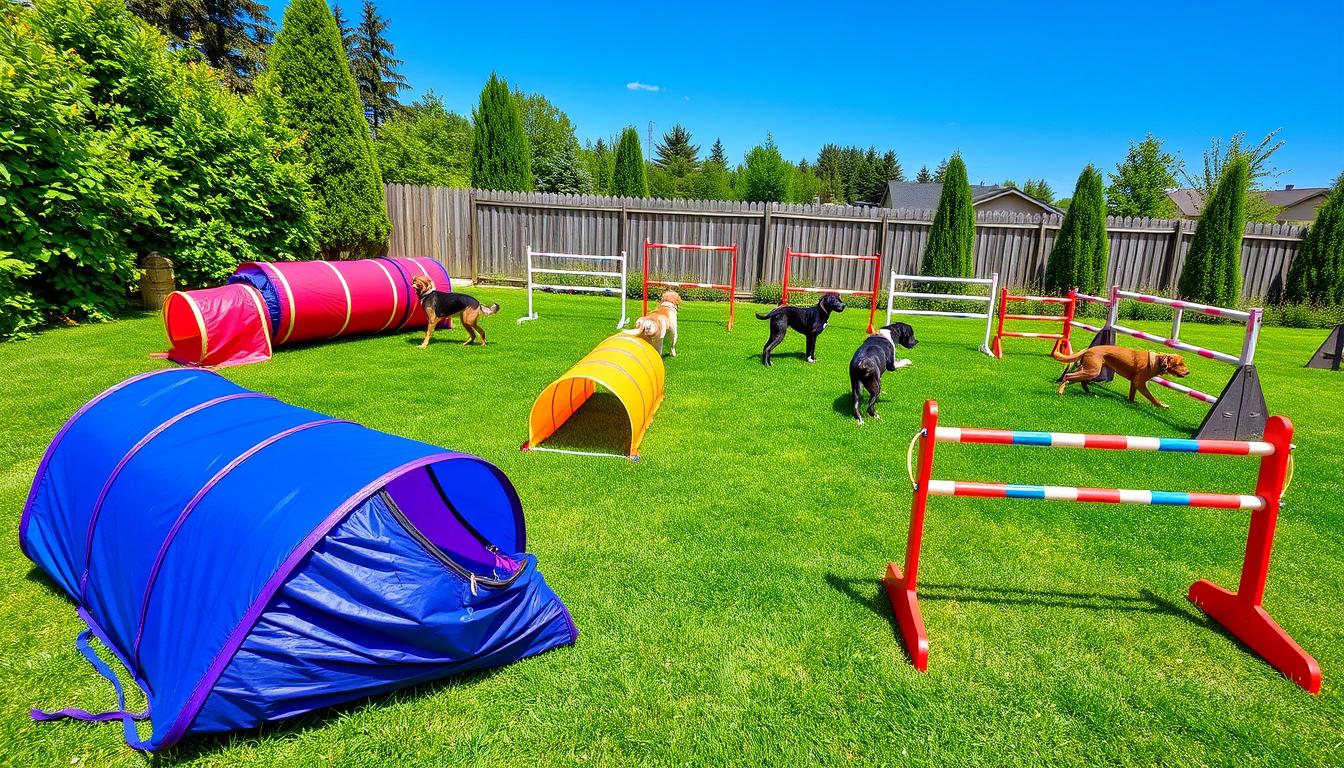
Starting your dog’s agility training at home is exciting. You’ll need a few key pieces of equipment. These include open tunnels, jumps, and weave poles. You can set them up in your backyard or indoor space.
Open Tunnel
An open tunnel is a great first step for beginners. The HDP Collapsible Dog Tunnel is 18 feet long and has 24-inch openings. It’s durable, portable, and perfect for home use.
This tunnel helps dogs feel confident. It lets them learn to go through spaces at their own speed.
Jumps
Jumps are a must-have for agility training. The Hurdle Set for Dog Fitness and Agility is a good choice. It lets you adjust the bar height for your dog’s skill level.
These jumps are lightweight and easy to move. They help you create a home agility course. You can make it harder as your dog gets better.
Weave Poles
Weave poles are key for dog agility. The Adjustable Agility Weave Poles are great for home training. They’re easy to set up and adjust to your dog’s level.
These poles teach your dog to stay in the center while going through. It’s a fun way to improve their skills.
Using these essential pieces of equipment at home helps your dog. They’ll get faster, more agile, and better at solving problems. This is great for dog agility.
Dog Agility Kits for Beginners
If you’re new to dog agility, a starter kit is a great choice. These kits have everything you need for a backyard course. You won’t have to buy each piece separately.
The Affordable Agility in the Bag kit is a top pick. It comes with an adjustable jump, weave poles, a tire jump, tunnel, and pause box. It’s made of sturdy materials and comes in a bag for easy transport.
The Agility Beginner Bundle is another excellent option. It includes a tire jump, single/double bar jump, weave poles, and a tunnel. These items help your dog learn and grow in agility.
These kits are perfect for a backyard course or agility trials. They offer quality, adjustable equipment in one package. They make it easy for beginners to start their dog’s agility journey.
dog agility equipment home
Setting up a dog agility course at home is fun. You can pick from many pieces like tunnels, jumps, and weave poles. You can also find special items like tire jumps and pause tables. Start with the basics and add more as your dog gets better.
These items are easy to move and set up. They are great for use in your backyard.
Here are some top dog agility equipment options for home training:
- Open Tunnels: These flexible tunnels come in different lengths and diameters to challenge your dog’s agility skills.
- Jumps: Adjustable and collapsible jump sets allow you to start low and increase the height as your dog’s skills improve.
- Weave Poles: Portable weave pole sets let you practice this tricky obstacle in your own backyard.
- Tire Jumps: This unique obstacle tests your dog’s coordination and timing as they leap through the suspended tire.
- Pause Tables: A pause table encourages your dog to stop and hold a position before continuing the course.
Many of these pieces are made for home use. They are light, strong, and easy to put together. This makes setting up a course in your backyard simple. With the right obstacles, you can make a fun and challenging place for your dog to train at home.
Benefits of Home Dog Agility Training
Training your dog at home with agility has many benefits of home dog agility. It keeps your dog physically and mentally sharp. The obstacles and challenges in the course help your dog stay healthy and active.
Exercise and Mental Stimulation
The dog agility mental stimulation makes your dog think and solve problems. This keeps their mind busy and stops boredom. It also stops bad habits like chewing too much or barking a lot.
Bonding with Your Dog
Training together on the agility course strengthens your bond with your dog. You work as a team, building trust and communication. Home training lets you set your own pace and make it fun for dogs of all ages and skills.
Choosing the Right Agility Equipment Size
Setting up a home dog agility course needs the right equipment size. This is key for your dog’s safety and success. The dog agility equipment size must fit your dog’s breed, size, and age. This ensures a safe and effective training.
To pick the right agility equipment for your dog, think about these things:
- Breed: Different dog breeds have unique physical traits. The equipment size should match your dog’s body type. Smaller breeds need smaller obstacles, while bigger dogs need taller and wider ones.
- Size: Measure your dog’s height at the shoulder. Use this to choose obstacle heights. Equipment that’s too tall or too short is unsafe and can be frustrating for your dog.
- Age: Younger or older dogs have different needs for agility equipment. Adjustable or versatile options can grow with your dog as they age.
Many dog agility equipment makers offer customizable or adjustable products. This helps you find the perfect fit for your dog. Choosing the right size boosts your dog’s performance. It also lowers injury risk and makes training fun for both of you.
Setting Up a Safe Backyard Agility Course
Creating a dog agility course in your backyard needs to be safe. The surface you pick, like grass or rubber matting, affects your dog’s safety. Also, the layout of obstacles must be planned well to keep your dog safe and moving smoothly.
Surface Considerations
The surface of your dog agility course is very important. Grass is natural but can get uneven. Rubber matting is better because it’s grippy and soft. Special agility surfaces are made just for dogs and are safe and comfy.
Obstacle Spacing and Layout
How you place obstacles in your backyard course is key. Think about the height, distance, and size of the course. This helps your dog move safely and enjoy the training.
By focusing on safety, you can make your backyard a great place for your dog to train. The right surface and obstacle setup make it safe and fun for your dog to learn and bond with you.
Training Tips for Home Agility
Starting dog agility training at home is fun for you and your dog. First, learn the basics and add more obstacles later. Teach your dog to “sit,” “stay,” and “come” first. These commands are key for the agility course.
Starting with Basic Commands
Learning basic commands is the first step. Make sure your dog knows these before moving on. Use treats and praise to help them learn and feel good about it.
Introducing Obstacles Gradually
After your dog knows the basics, start with simple obstacles like tunnels and low jumps. Make the challenges harder as they get more confident. Training in small steps makes it fun for both of you.
Be patient, consistent, and positive when training your dog. The right way will help your dog learn agility and strengthen your bond.
Maintaining and Storing Agility Equipment
Keeping your dog agility equipment in good shape is key. Regular cleaning and checks can make it last longer. This means your dog can keep enjoying training for many years.
Start by cleaning your equipment well after each use. Wipe down surfaces and look for any damage. Fix any problems right away. This keeps your gear safe and in great condition.
When you’re not using it, put your equipment in a dry place. A garage or shed is perfect. Many kits come with bags for easy carrying and storage. This protects it from the weather.
- Clean all agility equipment after each use, checking for wear and making necessary repairs
- Store equipment in a dry, protected area, such as a garage or shed, to prevent weather-related damage
- Utilize any carrying cases or bags that came with your agility kit for easy transportation and storage
By taking care of your dog agility equipment, your dog can keep having fun. This sport is exciting and rewarding for them.
Conclusion
Dog agility is great for keeping your dog active and close to you. You can set up a fun training area in your backyard. Start with beginner agility kits and follow safety tips and training methods.
Setting up a dog agility course at home is rewarding. It’s fun for you and your dog. You’ll see your dog get more exercise, think more, and bond with you.
Begin small and add obstacles slowly. Use positive reinforcement to help your dog learn. With time and the right tools, you and your dog will have lots of fun together.